
Brought to you by the PATH Engineering Team
In the daily grind of facilities management, physical security is often treated as a necessary, expensive headache. You hire a guarding agency to supply a set number of “warm bodies” on-site, buy some heavy locks, and hope that if an incident occurs, those elements will collectively hold the line.
But as Singapore’s Progressive Wage Model (PWM) drives guard salaries higher and higher, this headcount-heavy model is becoming structurally and financially unsustainable.
If you are a Managing Agent (MA) or an MCST Council Member, it is time to stop buying “Security Theater” and start looking at security as an engineered system. To do that, we have to look at the official national playbook: The Guidelines for Enhancing Building Security in Singapore (GEBSS) [1].
Jointly compiled by the Ministry of Home Affairs (MHA), the Singapore Police Force (SPF), the Internal Security Department (ISD), and the Building and Construction Authority (BCA), the GEBSS is the gold standard for building protection [1].
But unless you are a security consultant, you probably don’t have the time to read through hundreds of pages of technical compliance.
Here is your “Free Tuition” guide to the most practical, eye-opening principles hidden inside the GEBSS—and how you can use them to run a tighter, more cost-effective building today.
1. The Core Philosophy: “Defence-in-Depth”

The foundational security principle introduced in the GEBSS is the Layered Protection Concept, also known as “Defence-In-Depth” [3, 95, 96].
Adapted from military defensive strategy, the core idea is that a multi-layered defense system is significantly harder to penetrate than a single, heavy-duty barrier [96]. Rather than relying on a single “invincible” gate, a secure building integrates a series of five distinct layers that complement each other through a mix of physical, technological, and operational measures [95, 96].
Layer 1: Deter (The Psychological Barrier)
Deterrence is the outermost layer, designed to project high psychological friction to an adversary [96, 97]. The goal is to make it clear that the risk of failure or getting caught is unacceptably high [97]. Under the GEBSS, effective deterrence is achieved through prominent, visible security equipment, warning signs, strategic security lighting, and active, visible patrols [97].
Layer 2: Detect (The Early Warning)
You cannot respond to a threat you do not know exists. Detection identifies anomalies early so your response forces have time to react [97, 98]. The guidelines highly recommend employing dual-technology systems (such as pairing intelligent CCTV cameras with active intrusion detection sensors) to promptly and accurately verify alerts and reduce false alarms [98].
Layer 3: Delay (The Race Against Time)
This is the rule most buildings get wrong: Physical barriers do not stop intruders forever; they are only designed to buy time [98]. Whether it is a certified card-access door or a perimeter fence, a barrier’s sole job is to establish a “level of resistance” (delay time) [98]. The delay must hold the intruder off long enough for your response forces to arrive and neutralize the threat [96]. If you have heavy doors but no active monitoring, your physical delay is just a slow countdown to an undetected breach.
Layer 4: Deny (Strict Access Control)
Denial ensures that only verified, authorized individuals can access specific, sensitive zones within your facility [99, 100]. This is achieved by combining physical locks and access control systems (such as biometric readers, card scanners, or turnstiles) with strict security protocols to prevent unauthorized entry [99, 100, 131].
Layer 5: Response (The Intercept)
Response refers to the active measures taken once an alert is triggered—such as sounding sirens, turning on tactical lighting, focusing cameras on the breach point, and dispatching personnel [100]. Crucially, the GEBSS states that response measures must be seamlessly integrated with detection and delay to be effective and timely [101].
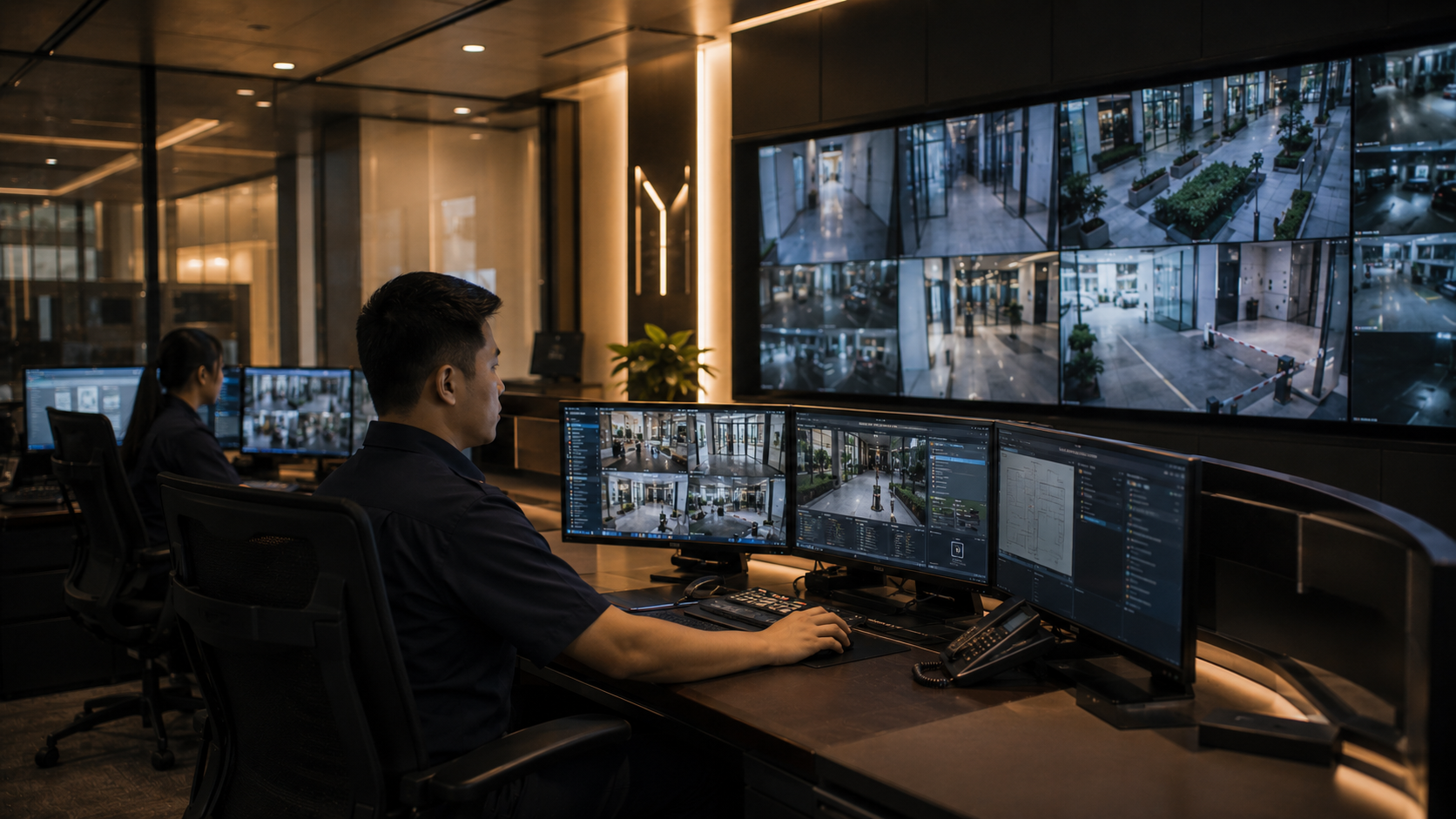
At PATH, this is why we bridge smart cloud technology with our 24/7 Global Security Operations Centre (GSOC). The moment an anomaly is detected, our remote command centre immediately verifies the threat and initiates emergency response protocols—ensuring the race against time is always won.
2. Spotting Your Critical Asset Blindspots
MAs are experts at keeping buildings operational, but certain structural areas present unique security vulnerabilities that are frequently overlooked during routine property walks.
Central Utility Rooms
Your building’s central utility rooms—housing water tanks, electrical switchboards, main communications lines, and air-conditioning units—are connected to almost every corner of your property [80]. The GEBSS notes that malicious actors can easily exploit utility ducts, pipes, and supply channels to perpetrate attacks or access secure areas [80].
- The GEBSS Fix: All windows and ventilation ducts leading to utility rooms must be secured with rigid, forced-entry resistant bars or meshes that can resist a manual breach attempt for at least 5 minutes [81, 82]. Doors must remain locked, monitored by CCTV, and secured with access control at all times [81].
Air-Conditioning & Fresh Air Vents
Central air-conditioning systems draw fresh air from the outside, mix it with treated air, and distribute it throughout the building [82, 83]. This represents a severe vulnerability, as the system can be used to rapidly spread chemical or biological contaminants [83].
- The GEBSS Fix: Fresh air intake vents must be positioned as high as possible on the building’s exterior or on a secure roof to remain completely inaccessible to the general public [84, 85]. All air pipes and vents must be closed with forced-entry resistant grilles or meshes rated for a minimum of 5 minutes of manual resistance [85].
Underground Car Parks
Enclosed spaces like basement car parks trap and reflect blast energy, amplifying lifting forces far more than an explosion in the open air [57].
- The GEBSS Fix: To mitigate the threat of Vehicle-Borne Improvised Explosive Devices (VBIEDs) causing a progressive collapse of the building’s core structure, the GEBSS recommends segregating public and private car parks, and placing public parking areas entirely outside the footprint of your main tower blocks [58].
3. The Government’s Verdict: Tech Reduces Manpower Costs
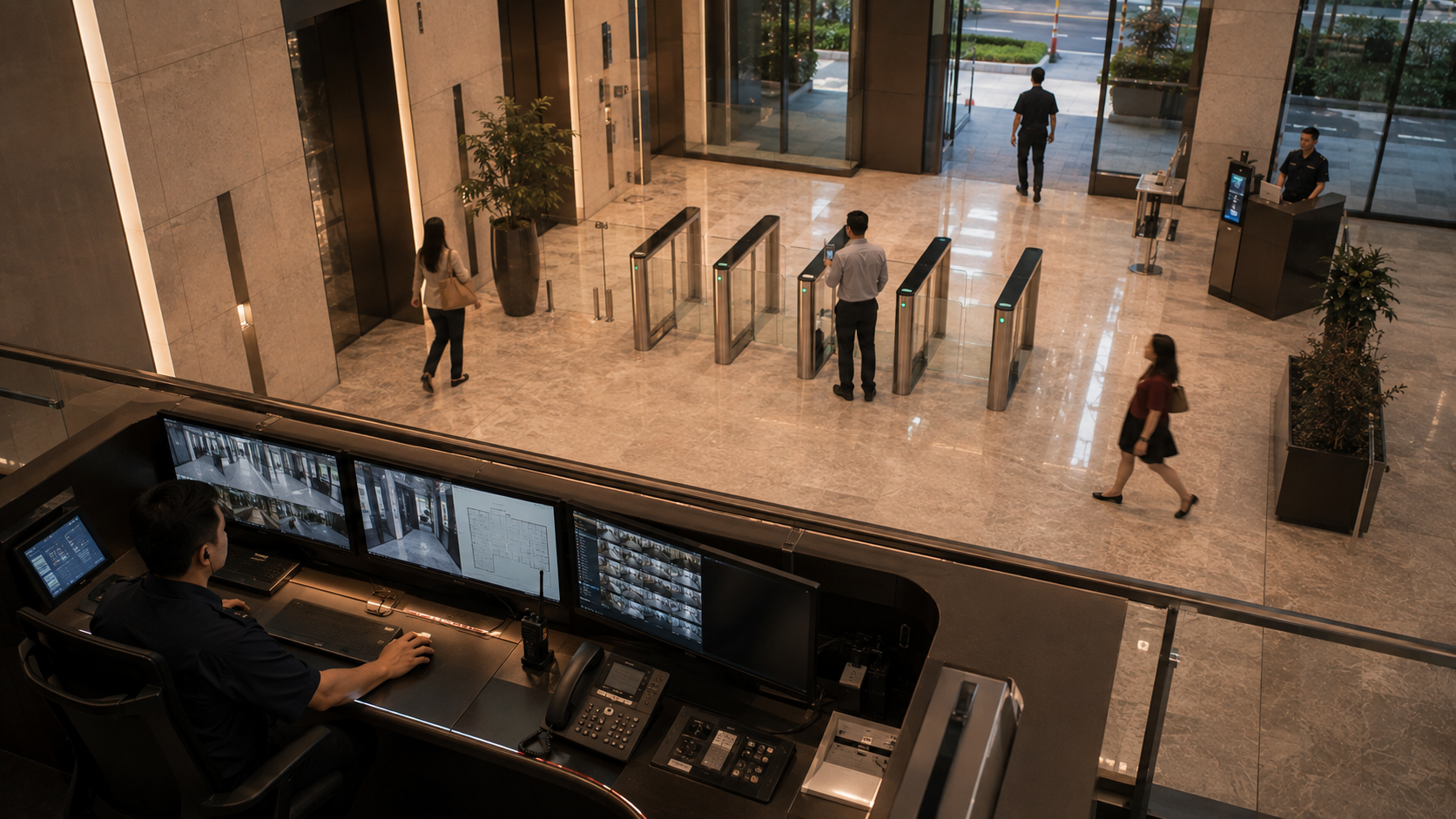
The most powerful revelation in the GEBSS framework is that the Singapore government explicitly encourages building owners to use technology to reduce physical manpower headcount and lower operational costs.
As explicitly stated in GEBSS Section 15 (Security Systems):
“Security systems, in the context of the building’s overall security plan, should be planned at the design-phase of the building. This will allow for coordination between design, manpower and technology. This can reduce operating costs of the building by using less security manpower, improve security by designing-out risks, and deliver better cost efficiency…” [296]
This completely debunks the legacy mindset that the only way to improve security is to hire more guards. By substituting bloated on-site headcount with smart, unified technology—like remote access barriers and cloud-connected CCTV—you are not just modernizing your building; you are executing the exact, cost-saving procurement strategies endorsed by Singapore’s Ministry of Home Affairs [1, 296].
4. Beware the 10-Year Technology Obsolescence Trap
While physical hardening structures like reinforced concrete walls or steel gates are built to last the lifetime of the property, technology operates on a completely different timeline.
The GEBSS warns that:
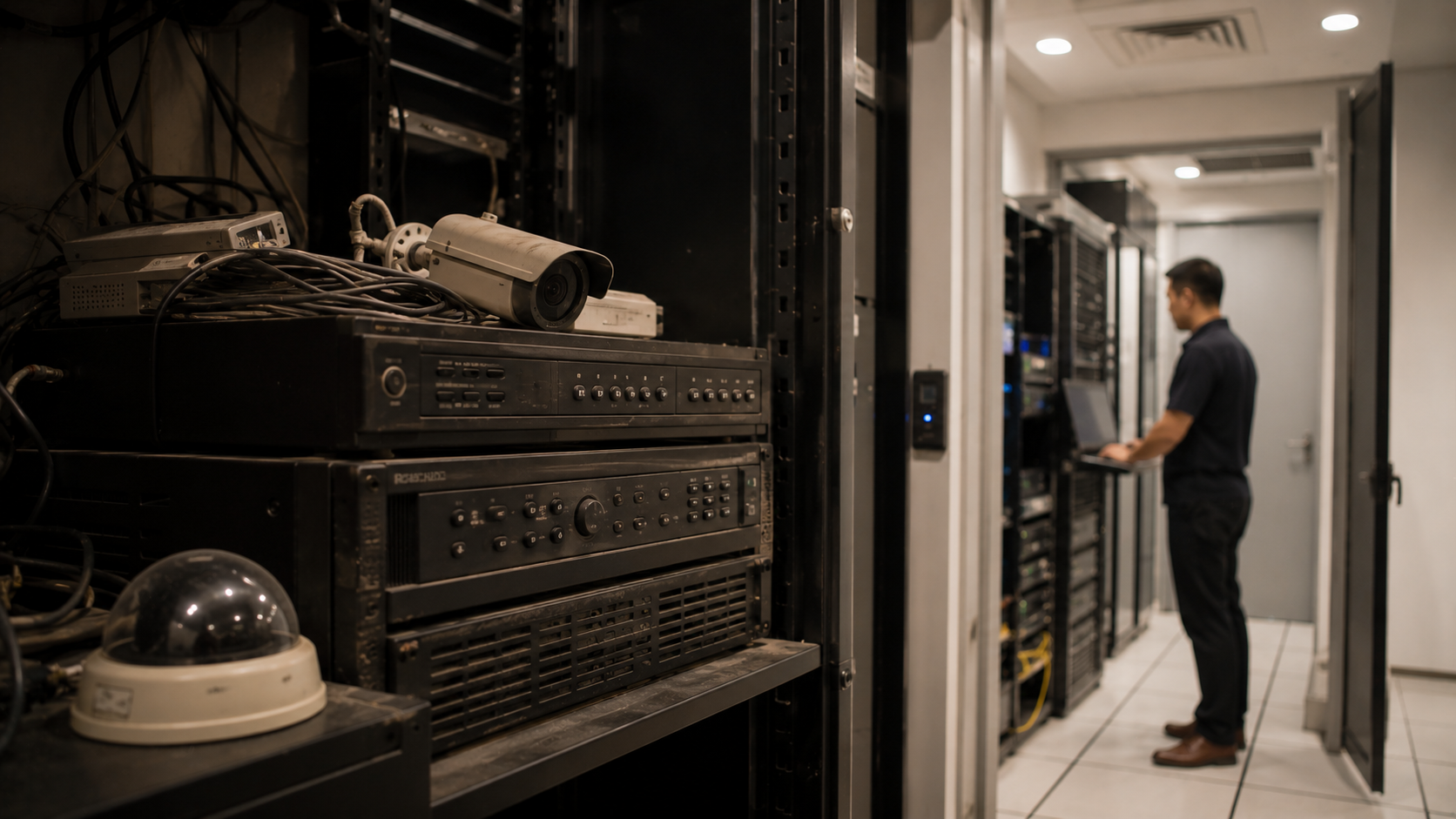
“Security systems, unlike physical protection elements, have a relatively short life span before they become technologically obsolete (usually not more than 10 years). The building’s infrastructure should be designed to allow security systems to be upgraded easily and in a modular way.” [298]
If your building’s security system is tied to a rigid, on-premise local server (a DVR in the guardhouse installed by a subcontractor who has since closed down), you are trapped in a dead-end hardware cycle. When that hardware breaks or becomes obsolete, you are forced to pay for a massive, expensive retrofitting project.
This is why PATH operates on a modular, cloud-first architecture. By decoupling your physical cameras from on-site recorders and running our platform securely in the cloud, we ensure your system is constantly updated with the latest software and security patches—eliminating the 10-year obsolescence trap entirely.
Stop Playing Detective. Start Buying Outcomes.
The traditional model of buying physical security in disconnected pieces—hiring guards from one agency, buying cameras from another installer, and prying open car barriers with a third—creates a massive “Vendor Silo Headache.” When an incident happens, vendors point fingers, and you are left holding the bag.
At PATH, we act as your Single, Accountable Operator. We bridge expert physical consulting with enterprise-grade cloud technology and 24/7 GSOC remote command to take end-to-end ownership of your building’s security. No silos. No finger-pointing. Just guaranteed outcomes and a structurally lower baseline cost.
Is your building standard-compliant?
We believe in earning trust through our “Free Tuition” Rule. Book a 100% free, unbiased building security audit with us today. We will walk your property, identify your structural and technological gaps, and show you exactly how to safely optimize your manpower using smart cloud tech—before you ever spend a single dollar.
From Manpower to Managed Security. One operator, total accountability.