
From Manpower to Managed Security: The Future of Physical Security in Singapore
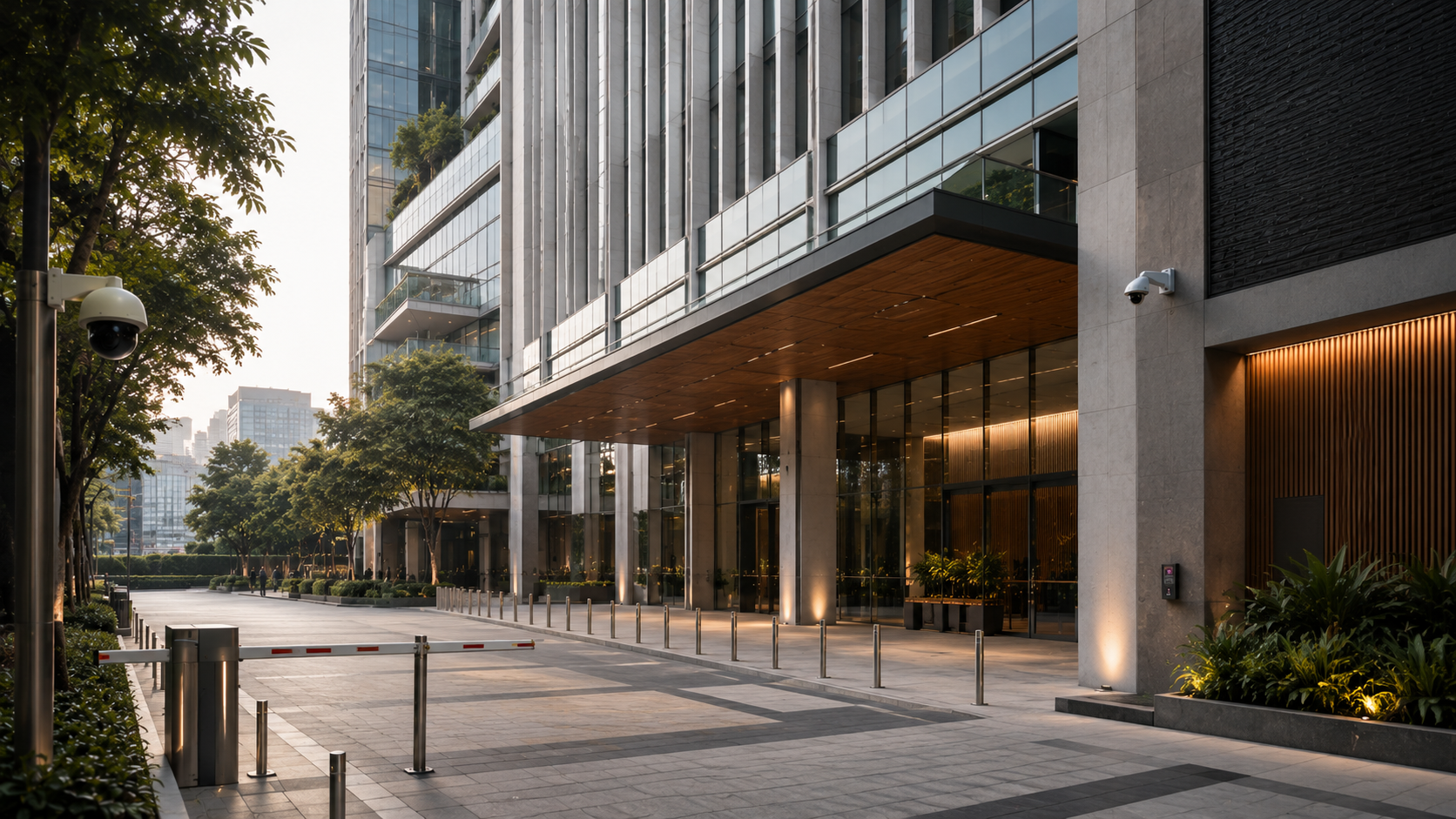
A property can have every guard post filled and still have a security problem.
Perhaps an officer cannot see a restricted entrance from their post. Perhaps a camera records an incident, but nobody reviews it until the next day. Or perhaps three vendors are involved—one supplies the guards, another installs the cameras, and a third maintains the access system—yet nobody owns the full response.
These are signs of a fragmented security model. PATH’s white paper, The Future of the Private Security Industry in Singapore, argues that the industry needs to move from selling guarding hours towards delivering managed security outcomes.
For Managing Agents (MAs), MCST councils and facility managers, that raises a practical question: who is responsible for making all the parts of your security operation work together?
Why the Guarding Model Is Under Pressure
Singapore’s security industry faces several connected challenges. Labour costs are rising, agencies struggle to attract and retain officers, and many properties still depend on labour intensive routines. At the same time, clients expect better visibility, faster responses and clear evidence that their security spending is effective.
The Progressive Wage Model has improved wage progression and created clearer pathways for security officers. That is important. But higher wages alone cannot fix long hours, workplace abuse or limited career development. Nor can property managers assume that adding another officer will solve every operational weakness.
If an alert never reaches the officer, the issue is communication. If a camera has a blind spot, it is system design. If nobody knows who should respond, it is a process failure.
Each problem needs to be identified before a useful solution can be chosen.
The Problem With Buying Security in Pieces
Security services are often procured separately. A guarding agency supplies officers. A systems vendor installs CCTV and access control. A consultant may provide advice during a tender. Each party completes its own scope of work.
But what happens when those scopes meet?
Imagine an access controlled door that is repeatedly left open. The system vendor may confirm that the door sensor works. The guarding agency may confirm that its officer completed the scheduled patrol. Both can fulfil their contracts while the door remains a security risk.
This is the gap PATH’s white paper highlights. When providers work in silos, the client can be left to connect the information, assign responsibility and decide what needs to change.
A more integrated approach starts with the property’s risk. It then designs the technology, staffing and response process around that risk.
Assess Before You Buy
The white paper points to a security risk assessment as a critical first step. Before requesting more guards or new equipment, a property manager should understand what needs protection, where vulnerabilities exist and what a successful response would look like.
For a smaller, straightforward site, a basic assessment may be sufficient. A complex operation or group of premises may need a more detailed, independent review. Either way, the assessment should lead to clear priorities.
For example, is the main concern unauthorised access after hours? Theft from a particular area? Visitor management? The ability to verify an alarm quickly? These questions produce a more useful brief than simply asking vendors to quote for the same number of officers as the previous contract.
They also help you avoid paying for technology that looks impressive but does little to address your property’s actual risks.
Where Technology Fits
Cloud CCTV, sensors, access control and AI analytics can help security teams detect and assess events across a site. They can provide an alert when a restricted door opens, bring the relevant camera view to an operator and record how the incident was handled.
Technology can also reduce repetitive work. Instead of asking an officer to watch every feed continuously, a system can flag activity that needs attention. The officer or central team can then assess the situation and decide what action to take.
That human decision remains essential. A sensor cannot always tell the difference between an intruder and an authorised contractor. A robot can patrol a route, but it cannot reliably provide the judgement, reassurance or practical help that people may need during an unpredictable incident.
The aim is to give security officers better information and more time for work that requires their skills.
What Is a Managed Security Provider?
A Managed Security Provider (MSP) brings several responsibilities together. Rather than supplying only guards or only equipment, an MSP can assess risk, plan the system, implement technology, monitor operations, coordinate personnel and maintain the service over time.
For a property manager, the value is a clearer line of accountability. If the camera, alert procedure and physical response are designed as one operation, it becomes easier to identify who should act when something goes wrong.
That does not mean one provider should be accepted without scrutiny. Ask how the proposed system addresses your risks, who monitors alerts, who responds on site, how equipment faults are handled and what performance reports you will receive.
“One partner” is useful only when the partner can show how the whole service works.
Better Security Jobs Are Part of the Plan
The white paper also makes an important point about the people doing the work. A modern security model should improve the officer’s role, not treat staff as a cost to remove.
When routine checks are supported by technology, officers can focus more on incident response, customer service and other tasks that require judgement. With suitable training, they can gain broader skills and clearer career opportunities.
The paper imagines a future officer who begins a shift with a dashboard of site activity, receives support from a command team and has the training to help someone in need. That is a more capable and rewarding role than simply standing at a post for long hours.
Property managers benefit too. A well supported officer who understands the site and has access to timely information is better placed to respond effectively.
A More Useful Question for Your Next Tender
The future of physical security is not a choice between guards and gadgets. It is a question of how people, processes and technology should work together at your property.
Before renewing a contract, ask your team: What are our main risks? How are they detected? Who verifies an alert? Who responds? What records will show whether the service worked?
Those answers will tell you more about your security than a headcount alone.
Want to explore the full case for managed security in Singapore? White Paper PATH.pdf, for its analysis of industry challenges, outcome based contracts, technology and the changing role of security officers.
From Manpower to Managed Security. One operator, total accountability.
Company
Resources