
CCTV Commissioning, Maintenance, Resilience and Cybersecurity under the SPF VSS Standard
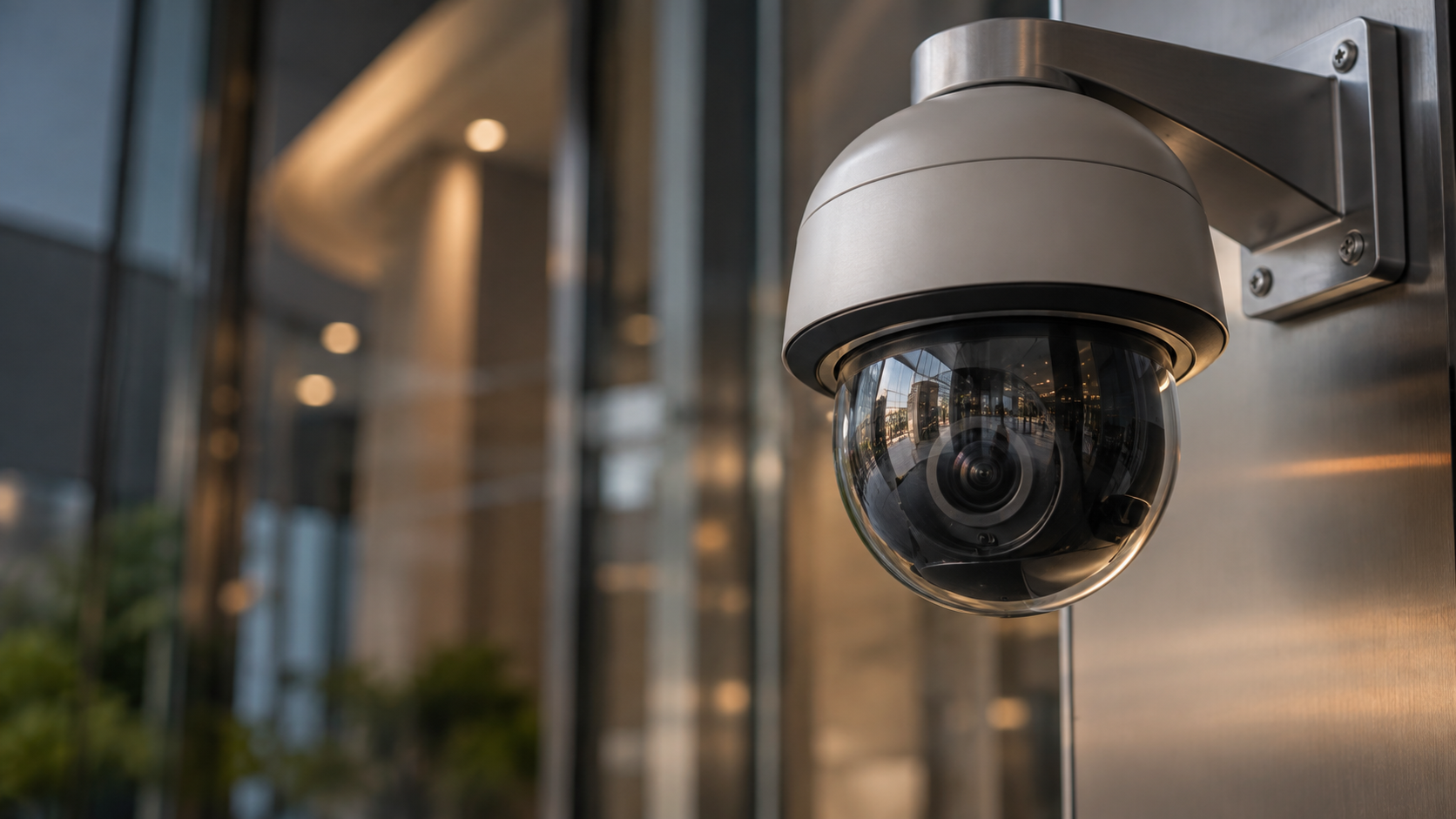
A CCTV system is not complete simply because every camera is installed and appears online.
The real questions are:
Does every camera still provide the agreed view?
Can the required recorded footage actually be retrieved?
What happens when the network or power fails?
How quickly is a failed camera repaired?
Can an unauthorised person access or disable the VSS?
The Singapore Police Force Video Surveillance System Standard for Buildings treats commissioning, maintenance, resilience and cybersecurity as continuing parts of VSS performance rather than one-off activities at project handover.
The Standard calls for agreed camera views and live and recorded image quality to be documented at commissioning. It also sets a 95% system-availability objective over 12 months, calls for faults to be rectified within 24 hours or sooner where serious coverage is lost, and requires regular audits of matters such as storage duration, alarms and image quality.
Its broader message is:
A CCTV system is only effective while it continues to deliver the Operational Requirements it was originally designed to achieve.
What does CCTV commissioning mean?
Commissioning is the stage where the installed VSS is checked against the agreed design and Operational Requirements.
The Standard says that once the system is operational:
agreed camera views and image quality for both monitor views and recorded images should be properly documented.
This is much more meaningful than simply confirming:
“Camera online.”
What should be checked during CCTV commissioning?
At minimum, commissioning should establish whether the camera provides the agreed view and image quality.
Based on the wider VSS Standard, this can involve checking:
- the intended camera field of view;
- required Detect, Observe, Recognise or Identify performance;
- live image quality;
- recorded image quality;
- camera naming and timestamps;
- recording;
- alarm integration;
- playback;
- export;
- network operation; and
- system resilience.
The Standard itself explicitly requires documentation of the agreed camera views and live and recorded image quality.
The broader list above is a consultant’s practical application of the surrounding VSS requirements.
Is checking that every camera is online enough?
No.
A camera can be online but still fail its Operational Requirement.
For example:
- the view may have shifted;
- a plant may block the camera;
- lighting may have changed;
- focus may have deteriorated;
- the recording resolution may be wrong;
- retention may be too short; or
- an entrance camera may no longer achieve Identification.
That is why the Standard requires agreed views and image quality to be documented rather than treating connectivity as sufficient.
Why should recorded footage be checked separately from the live image?
Because live and recorded video may not have identical quality.
Recording settings, compression or configuration can reduce the usable detail available after an incident.
The Standard therefore specifically refers to documenting both:
monitor view
and
recorded image quality.
Consultant’s perspective
If a camera is intended to provide Identification at a building entrance, the commissioning process should prove that the recorded footage also achieves that outcome.
The live image alone is not enough.
Should camera views be photographed or documented at handover?
The Standard says the agreed views and image quality should be properly documented.
It does not prescribe one universal documentation format.
Consultant’s perspective
A practical record could include:
camera ID, location, intended purpose, required field-of-view level, approved live image and approved recorded image.
This gives the building owner a baseline against which future changes can be compared.
Why is a commissioning baseline useful later?
Because the environment changes.
After handover, someone may:
move a camera, install signage, grow landscaping, change lighting, add partitions or alter a recording setting.
Without a baseline, it can be difficult to determine whether the VSS still performs as originally intended.
The Standard says the documented views and image quality should also be reviewed periodically.
How often should CCTV be reviewed?
The Standard does not give one fixed universal interval for reviewing every camera view.
It says agreed views and image quality should be reviewed periodically by the building owner.
It also calls for regular audits covering storage duration, alarms and image quality.
The exact maintenance and audit schedule therefore needs to be established by the organisation.
Does the VSS Standard specify an uptime requirement?
The Standard says:
System availability should be set at 95% over a 12-month time frame.
This is an important operational performance objective.
It recognises that VSS effectiveness depends not only on initial installation quality but on how reliably the system remains available afterwards.
What does 95% CCTV availability mean?
At a high level, 95% availability means the VSS should be available for its intended operation for 95% of the measured period.
However, the Standard does not provide a detailed formula in this section defining:
planned maintenance exclusions, individual-camera weighting or how partial system degradation should be counted.
So it would be inappropriate to invent a calculation methodology and attribute it to SPF.
Consultant’s perspective
A maintenance contract should ideally define clearly:
What constitutes an outage, how availability is measured, and how partial loss of coverage is treated.
The Standard gives the 95% target; the project needs the operational measurement method.
How quickly should CCTV faults be repaired?
The Standard says:
All system and equipment faults should be rectified within 24 hours, or sooner if the fault results in serious loss of VSS coverage.
This is stronger than a generic requirement to repair equipment “as soon as practicable”.
The seriousness of the coverage loss matters.
Does every fault have exactly a 24-hour repair target?
The Standard gives 24 hours as the general rectification period but explicitly says faults causing serious loss of VSS coverage should be addressed sooner.
This means fault prioritisation should consider security impact.
For example, losing:
a low-risk overview camera
may have a different operational consequence from losing:
the only Identification camera at the main entrance.
Who is responsible for ensuring the CCTV system performs properly?
The Standard says the building’s Security Manager should be responsible for proper implementation of the VSS to meet its Operational Requirements.
That includes regular audits of:
- storage duration;
- alarms;
- live image quality; and
- recorded image quality.
This is important because responsibility for CCTV should not end when the installer hands over the system.
What should a CCTV maintenance audit check?
The Standard expressly identifies:
storage duration, alarms and the quality of live and recorded images.
A practical audit can therefore ask:
Can the oldest required footage still be retrieved?
Are alarm integrations working?
Are camera views still correct?
Is recorded image quality still fit for purpose?
Have any cameras degraded or become obstructed?
The last questions are consultant applications of the Standard’s maintenance philosophy.
Can a CCTV system deteriorate without completely failing?
Yes.
The Standard warns that deterioration should be rectified immediately because degraded VSS performance can create security gaps.
A degraded system may still appear operational.
Examples could include:
soft focus, dirty domes, obstructed views, unstable images or reduced retention.
Consultant’s perspective
This is why maintenance should assess performance, not simply whether the device responds to a network ping.
Does CCTV need UPS backup?
Yes.
The Standard says a UPS with at least 30 minutes of backup capacity shall be provided for VSS components such as:
- VMS;
- NVR systems; and
- viewing terminals.
The purpose is to keep the system operating until generator power becomes available or allow a controlled shutdown during an extended outage.
Why 30 minutes of UPS?
The Standard explains two purposes.
The UPS can:
bridge the period until generator backup power starts
or
allow the VMS to shut down properly during prolonged power loss when no generator is available.
This helps preserve the integrity of recorded video.
So UPS is both an availability measure and a data-integrity measure.
Does every individual CCTV camera need 30 minutes of local UPS?
The cited requirement specifically gives examples including:
VMS, NVR systems and viewing terminals.
It does not in this section provide a universal component-by-component architecture for powering every camera.
The power design needs to consider the complete VSS, including the network and PoE infrastructure that the cameras depend on.
That latter point is a consultant design consideration rather than a separately stated SPF requirement.
What happens if the cameras have power but the network switch does not?
The cameras may remain powered locally but still lose connection to the recorder or viewing system.
Consultant’s perspective
VSS resilience therefore needs to consider the entire dependency chain:
camera → PoE/network → transmission → NVR/VMS → viewing terminal
Backing up only the NVR does not automatically keep the whole surveillance system operational.
The Standard’s requirement is focused on VSS continuity and integrity, so supporting infrastructure needs to be considered accordingly.
Should CCTV generate an alarm when power or video is lost?
Yes.
The Standard says the VSS should include an alert system for:
loss of power or image due to technical failure.
This is important because an unnoticed failure can leave a security gap for days or weeks.
Should CCTV power equipment be secured?
Yes.
The Standard says the VSS power source and associated equipment should be located in a secured environment.
Power cables running through public areas should be enclosed in metal conduit.
The objective is to prevent the supporting power infrastructure from becoming an easy way to disable surveillance.
Does the VSS Standard require spare capacity?
Yes.
It says the VSS should be designed and installed with a minimum of 20% spare capacity so future expansion can be achieved.
It also says expansion should cause minimal disruption to the working system.
This is separate from the 20% reserve recording media discussed in the storage section.
What does 20% spare VSS capacity actually mean?
The Standard states the overall 20% future-expansion requirement but does not break it down into a universal component-by-component formula.
Consultant’s perspective
Depending on the design, future capacity may need to be considered across areas such as:
- recorder channels;
- server resources;
- network bandwidth;
- switch ports;
- rack space;
- power capacity; and
- storage.
The exact application should be stated clearly in the project design rather than claiming that SPF defines a single interpretation for all systems.
Is the 20% spare capacity the same as the 20% storage reserve?
No.
These are separate provisions in the Standard.
The storage section calls for at least 20% reserve recording media.
The integration section separately calls for at least 20% spare capacity for future expansion.
They address different design concerns.
Does CCTV network resilience matter?
Yes.
The Standard says the VSS network needs enough bandwidth to support recording, display and analytics.
It also says automatic network and server failover can be considered, designed to avoid loss of data during the transition.
For Sensitive and Critical Areas, alternate cameras may be placed on different networks to mitigate transmission failure risk.
This supports the broader principle that surveillance should not rely unnecessarily on a single point of failure.
Does the VSS need a completely redundant network?
The source does not state that every VSS must use full network redundancy.
It says automatic failover could be considered, and gives stronger examples for Sensitive and Critical Areas.
So redundancy should be proportionate to the operational requirement and risk.
Should IP cameras have edge recording?
The Standard says building owners should consider edge recording, such as onboard SD-card storage, to maintain video during network-equipment failure.
It also says the NVR should automatically retrieve the missing recording once network service is restored.
That can provide another layer of recording resilience.
What is CCTV cybersecurity?
For an IP-based VSS, cybersecurity means protecting cameras, NVRs, VMS platforms, networks and accounts against:
unauthorised access, interference, manipulation or disabling.
The Standard says building owners should consider engaging a cybersecurity specialist to understand VSS cybersecurity risks and appropriate protective measures.
It also provides a set of General Cybersecurity Guidelines for IP Video Surveillance Systems in Annex B.
Is cybersecurity really relevant to physical CCTV?
Yes.
Modern IP cameras and recorders are networked computing devices.
If an unauthorised user gains control of the system, they may potentially:
view cameras, alter settings, interfere with recording or disrupt availability.
The Standard therefore treats cybersecurity as part of overall VSS protection rather than a separate IT-only matter.
How often does the Standard recommend updating CCTV firmware?
Annex B recommends:
regular firmware and operating-system updates every month
for applicable VSS components.
It also says unsupported products should be replaced.
This is specifically an Annex B cybersecurity recommendation.
It should not be presented as a universal legal requirement that every camera must receive a firmware release every month.
Does that mean firmware must physically change every month?
Not necessarily.
The Annex wording says regular firmware and OS updates every month.
A practical maintenance process would involve checking for applicable patches and applying appropriate updates.
The Standard does not say that a vendor must release a new firmware package every month.
Consultant’s perspective
A sensible distinction is:
monthly patch review / update process
rather than claiming every device must receive a new firmware version each month whether one exists or not.
What should happen when a CCTV product is no longer supported?
Annex B says:
unsupported products should be replaced.
This is an important lifecycle consideration.
A camera may continue producing video long after its manufacturer stops providing security updates.
Operationally it still “works”.
Cybersecurity-wise, its risk may have changed significantly.
Should default CCTV passwords be changed?
Yes.
Annex B explicitly recommends changing default passwords.
Leaving default credentials in place is an obvious route to unauthorised access.
What password strength does Annex B recommend?
The Annex recommends a 12-character password using at least three of the following four groups:
uppercase letters, lowercase letters, special characters and numbers.
It also recommends changing passwords every 6 to 12 months and not displaying passwords in clear text.
These are source-specific Annex B recommendations.
Should CCTV users share one common account?
No.
Annex B recommends a unique account for each individual and the timely removal of unnecessary accounts.
This improves accountability.
If everyone uses:
“security / password123”
it becomes very difficult to establish who accessed or changed the system.
Should ordinary CCTV operators have administrator rights?
Annex B says:
CCTV operators should have read-only access.
This follows the principle of limiting users to the privileges required for their role.
A routine monitoring operator does not necessarily need the ability to:
change network configuration, delete accounts or alter core system settings.
What if operators need to export footage?
The Annex uses the phrase read-only access, while the main body of the Standard expects VSS systems to support playback and export.
The document does not provide a detailed role-permission matrix resolving every operational function.
Consultant’s perspective
A project should therefore define roles deliberately, for example:
Operator – monitoring and authorised routine functions
Supervisor/Investigator – authorised playback/export
Administrator – configuration and user administration
That role structure is an implementation example, not an SPF-prescribed account hierarchy.
Does the Standard recommend encrypted communications?
Annex B recommends using:
HTTPS/TLS where possible
and strong cryptographic algorithms.
This helps protect network communications from interception or manipulation.
Should CCTV be separated from the Internet?
Annex B recommends segregation from the Internet, including physical separation or firewall controls restricting connections to authorised destinations.
This does not necessarily mean every VSS must be completely air-gapped.
The source gives segregation and restricted connectivity as cybersecurity measures.
What about remote CCTV access?
Annex B recommends securing remote access using:
VPN and multi-factor authentication (MFA).
This is significantly stronger than exposing the camera or NVR directly to the public Internet using simple password authentication.
Does the Standard mention network access control?
Yes.
Annex B gives examples including:
MAC-address whitelisting and 802.1X switch-port authentication.
These are recommendations for strengthening who or what can connect to the surveillance network.
Should CCTV access be logged?
Yes.
Annex B recommends logging:
user access and administrator activity
and regularly reviewing those logs for anomalies.
The main maintenance section also says an audit trail should record physical and network access to VSS recorders, such as file-retrieval transactions.
So auditability appears in both the operational and cybersecurity parts of the Standard.
Why are audit logs important?
They help answer questions such as:
Who accessed the recorder?
Who exported footage?
Who changed a setting?
Was there unusual administrative activity?
Without individual accounts and reliable logs, these events can be difficult to trace.
Does Annex B mention anti-malware?
Yes.
It recommends keeping anti-malware software up to date for applicable systems.
This is more likely to apply to systems such as VMS servers or recorders where the underlying platform supports such controls, rather than assuming identical software runs directly on every camera.
Should all CCTV devices use the same time source?
Annex B recommends configuring devices to retrieve time from a single NTP source.
Time synchronisation is important for:
event reconstruction, access-control correlation, alarm correlation and investigations.
The main recording section also emphasises accurate camera ID, date and time metadata.
Should NVRs and VMS servers be physically secured?
Yes.
Annex B recommends:
secure hosting facilities and secure racks where possible, together with protection of power and network cables and connectors using conduits.
Cybersecurity therefore does not replace physical security.
The two support each other.
Does Annex B address backup and disaster recovery?
Yes.
It recommends:
regular backups
and, where possible,
Business Continuity and Disaster Recovery exercises.
This reinforces the broader VSS resilience principle.
A surveillance system should be designed not only to function normally but also to recover from disruption.
What is the relationship between cybersecurity and system availability?
A cyber incident can become a physical-security issue if it causes cameras or recording to become unavailable.
That is why Annex B includes measures addressing:
updates, passwords, accounts, network controls, event logs, backup and resilience.
The objective is not just protecting confidential data.
It is also protecting the availability and integrity of the surveillance operation.
Do CCTV operators need training?
Yes.
The Standard says VSS operators should receive appropriate training determined by the Security Manager.
They should understand:
- what to look for;
- how to operate the VSS;
- how to respond to potential incidents; and
- how to monitor an event without losing information that may be important to a later investigation.
The effectiveness of the VSS therefore depends partly on the competence of its operators.
Should CCTV operators have SOPs?
The Standard says it would be beneficial to have Standard Operating Procedures available for reference and to conduct regular refreshers so operators remain familiar with them.
That is important because a camera may detect an event, but someone still needs to know:
What do we do now?
What should a CCTV SOP cover?
The source does not give a complete SOP template.
Consultant’s perspective
Depending on the site, CCTV SOPs might address:
- alarm acknowledgement;
- incident verification;
- camera selection;
- escalation;
- guard deployment;
- playback;
- evidence export;
- preservation of footage; and
- reporting.
Those are practical examples rather than requirements listed by the Standard.
Does the Standard mention operator fatigue?
Indirectly, yes.
It says VSS operator shift patterns should include sufficient breaks to support staff health and productivity.
This is important because surveillance is a human-performance task.
A technically excellent monitoring system can still perform poorly if the operator is unable to maintain attention.
Does the SPF VSS Standard require CCTV signage?
The Standard says notices should be placed at prominent locations or points of entry to inform people that VSS is in operation.
It links this guidance to the Personal Data Protection Act (PDPA) and refers readers to PDPC advisory guidance.
Where should CCTV notices be placed?
The Standard says notices should be strategically located at:
prominent locations or building entry points.
The objective is to inform individuals that VSS is operating.
Is the PDPA wording in the 2022 VSS Standard current legal advice?
This needs care.
The VSS Standard was issued in March 2022 and its reference section cites an earlier PDPC advisory guideline.
For this VSS Insights article, we can accurately report what the Standard says about signage and PDPA.
However, if the question is:
“What exactly does current Singapore PDPA law require for CCTV in 2026?”
that should be independently verified against current PDPC materials rather than relying solely on the wording in this 2022 document.
Is a CCTV maintenance contract just about replacing broken cameras?
No.
The Standard’s maintenance expectations are much wider.
The system should continue meeting its Operational Requirements, and regular audits should consider:
storage duration, alarms, live and recorded image quality, system availability and faults.
Maintenance is therefore better understood as:
maintaining surveillance performance
rather than simply:
repairing hardware.
What should a good VSS maintenance regime monitor?
A practical maintenance regime can consider four broad areas:
Area | Example Questions |
|---|---|
Availability | Are cameras, NVRs, VMS and viewing facilities operating? |
Performance | Are views, focus, lighting and recorded image quality still correct? |
Retention | Is the required recording history still available? |
Security | Are firmware, accounts, network controls and audit logs being maintained? |
The table is a consultant’s summary of the Standard’s maintenance and cybersecurity provisions.
Example: the camera is online but the system has still failed
Imagine a main-entrance camera.
The monitoring software shows:
ONLINE
But over time:
the camera has shifted slightly, a new sign blocks part of the view and the person entering no longer reaches the required Identification level.
Technically:
the camera works.
Operationally:
the camera has failed its original purpose.
That is precisely why the Standard requires periodic review of agreed camera views and image quality.
Example: retention silently falls below 31 days
Suppose the system originally records 50 cameras for the required retention.
Later:
10 additional cameras are added.
The NVR continues recording.
No fault alarm appears.
But footage is now overwritten sooner.
The system may appear completely healthy while the agreed retention requirement has been lost.
This is why the Standard specifically calls for regular auditing of storage duration.
Example: cyber risk in an otherwise working camera
An old IP camera may still produce excellent video.
But if:
the product is unsupported, its firmware has not been updated and default credentials remain active,
the cybersecurity risk is very different from when the camera was first commissioned.
Annex B therefore addresses:
firmware, unsupported equipment, passwords and account management.
The camera’s picture quality alone is not enough to judge its continued suitability.
Common misunderstandings about VSS maintenance and cybersecurity
“If the cameras are online, the CCTV system is healthy.”
Not necessarily. View quality, retention, alarms and recorded image quality also need to be checked.
“CCTV maintenance only means cleaning cameras and replacing faulty hardware.”
The Standard requires a regime that keeps Operational Requirements consistently satisfied.
“A failed camera can wait until the next scheduled maintenance visit.”
The Standard says faults should be rectified within 24 hours, or sooner where serious coverage is lost.
“UPS is optional if there is a generator.”
The Standard calls for at least 30 minutes of UPS for VMS, NVR systems and viewing terminals specifically to bridge generator start-up or support controlled shutdown.
“The 20% spare capacity is just extra storage.”
No. The Standard separately addresses future VSS expansion and reserve recording media.
“CCTV cybersecurity is an IT problem, not physical security.”
A cyber compromise can disable, manipulate or expose the surveillance system. The Standard therefore includes cybersecurity as part of VSS guidance.
“One administrator account shared by the guards is easier.”
Annex B recommends individual user accounts and read-only operator access.
“Remote access only needs a strong password.”
Annex B recommends secure remote access using VPN and MFA.
“A CCTV camera can be kept forever as long as the picture still looks good.”
Annex B recommends replacing unsupported products.
“Recognition in CCTV means facial-recognition software.”
No. In the SPF VSS Standard, Recognition is also an image-detail category and should not be confused with biometric facial-recognition technology.
Practical VSS Commissioning and Maintenance Review
A building owner can review the system using the following questions:
- Has each camera’s intended Operational Requirement been documented?
- Has the final field of view been approved?
- Has live image quality been recorded as a commissioning baseline?
- Has recorded image quality also been verified?
- Are camera IDs and locations clearly documented?
- Do entrance Identification views still achieve their intended performance?
- Have lighting conditions changed?
- Are any views obstructed?
- Is focus still correct?
- Can footage from the required retention period actually be retrieved?
- Are storage-duration audits carried out?
- Are alarm integrations still functioning?
- Does alarm activation show the correct camera?
- Is system availability being measured?
- How is the 95% availability objective calculated?
- Are faults recorded and tracked?
- Are faults normally rectified within 24 hours?
- Are serious coverage failures escalated faster?
- Does the VSS generate an alarm when video or power is lost?
- Do VMS, NVR and viewing terminals have at least 30 minutes UPS?
- Are relevant network and PoE dependencies also resilient?
- Has at least 20% future expansion capacity been considered?
- Can future expansion occur without major disruption?
- Are firmware and software updates reviewed regularly?
- Are unsupported products identified and replaced?
- Have default passwords been removed?
- Are accounts unique to individual users?
- Are unnecessary accounts removed promptly?
- Are operator privileges restricted appropriately?
- Is remote access protected using appropriate secure controls?
- Is the VSS adequately segregated from uncontrolled Internet access?
- Are user and administrator activities logged?
- Are logs reviewed?
- Is system time synchronised?
- Are NVRs, VMS servers, racks, cables and power infrastructure physically secured?
- Are backups maintained?
- Are resilience and recovery procedures tested?
- Have operators received suitable training?
- Are SOPs available and refreshed periodically?
- Do operator shifts provide sufficient breaks?
- Are VSS notices placed at appropriate prominent locations or entry points?
- Are privacy and data-protection practices separately reviewed against current applicable requirements?
This is a consultant’s review framework based on the VSS Standard rather than a checklist reproduced from the source.
Conclusion
The SPF VSS Standard treats surveillance as a lifecycle system.
Its performance does not end at installation.
The system has to remain:
available, correctly configured, resilient, secure and operationally useful.
That means commissioning should prove the agreed live and recorded image performance.
Maintenance should continue checking:
views, alarms, storage and recording quality.
The Standard sets a 95% system-availability objective over 12 months and says faults should generally be corrected within 24 hours or sooner where major coverage is affected.
Critical VSS components such as VMS, NVR systems and viewing terminals should have at least 30 minutes of UPS backup, while new systems should provide at least 20% spare capacity for expansion.
And because modern VSS is increasingly network based, Annex B extends the security problem into:
firmware → passwords → accounts → network access → logs → physical security → backup and recovery.
The final practical lesson is:
Do not maintain CCTV by asking only whether the camera is online. Maintain it by asking whether the entire surveillance outcome still works as originally designed.
From Manpower to Managed Security. One operator, total accountability.
Company
Resources