
By Mohammed Muneer Khan (Mo) & The PATH Team
Imagine spending over $10,000 on a heavy-duty, lab-certified steel security door for your building’s critical utility room or server vault. You have multi-point locks, reinforced steel hinges, and keycard access. You feel 100% protected.
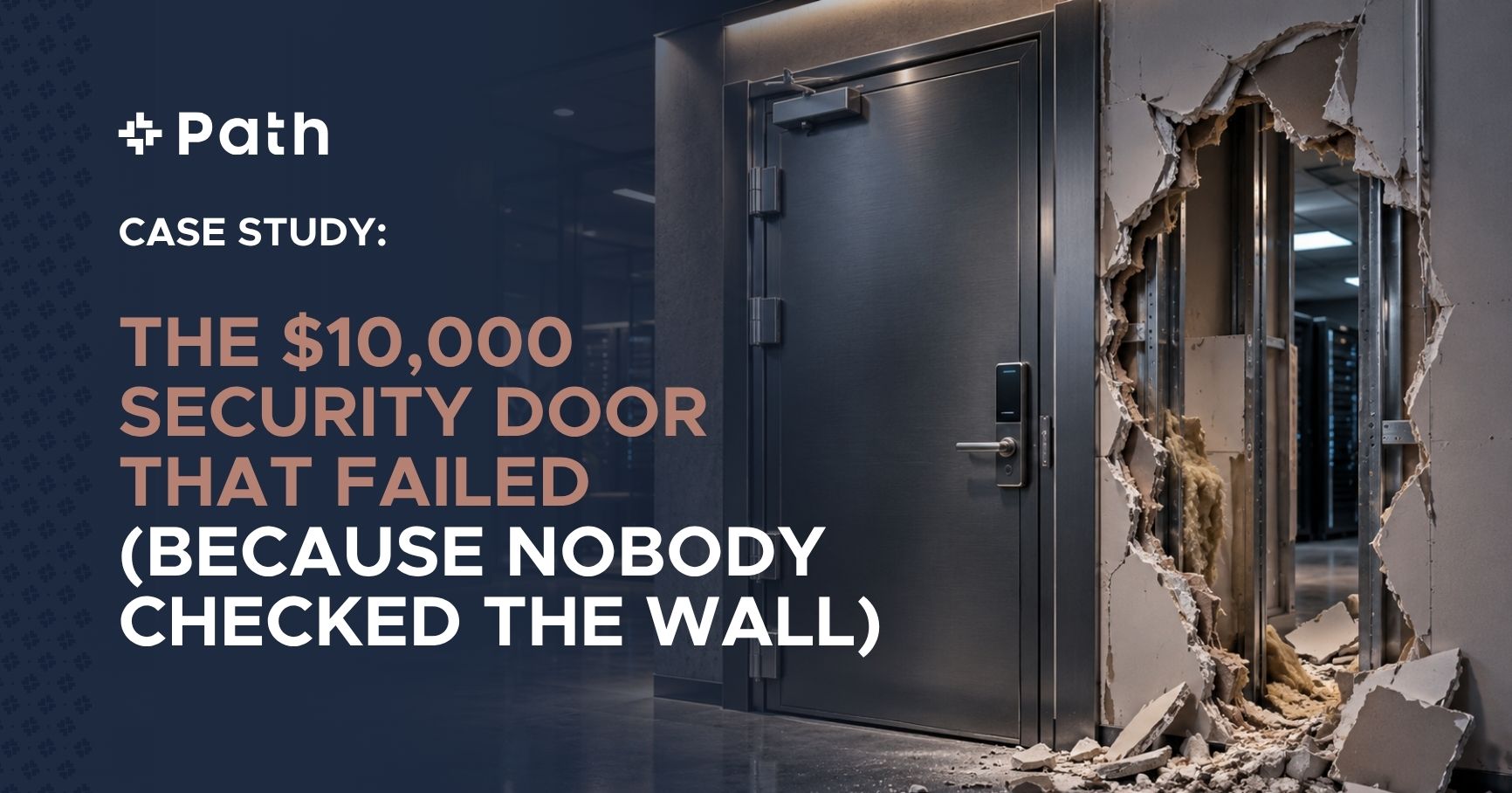
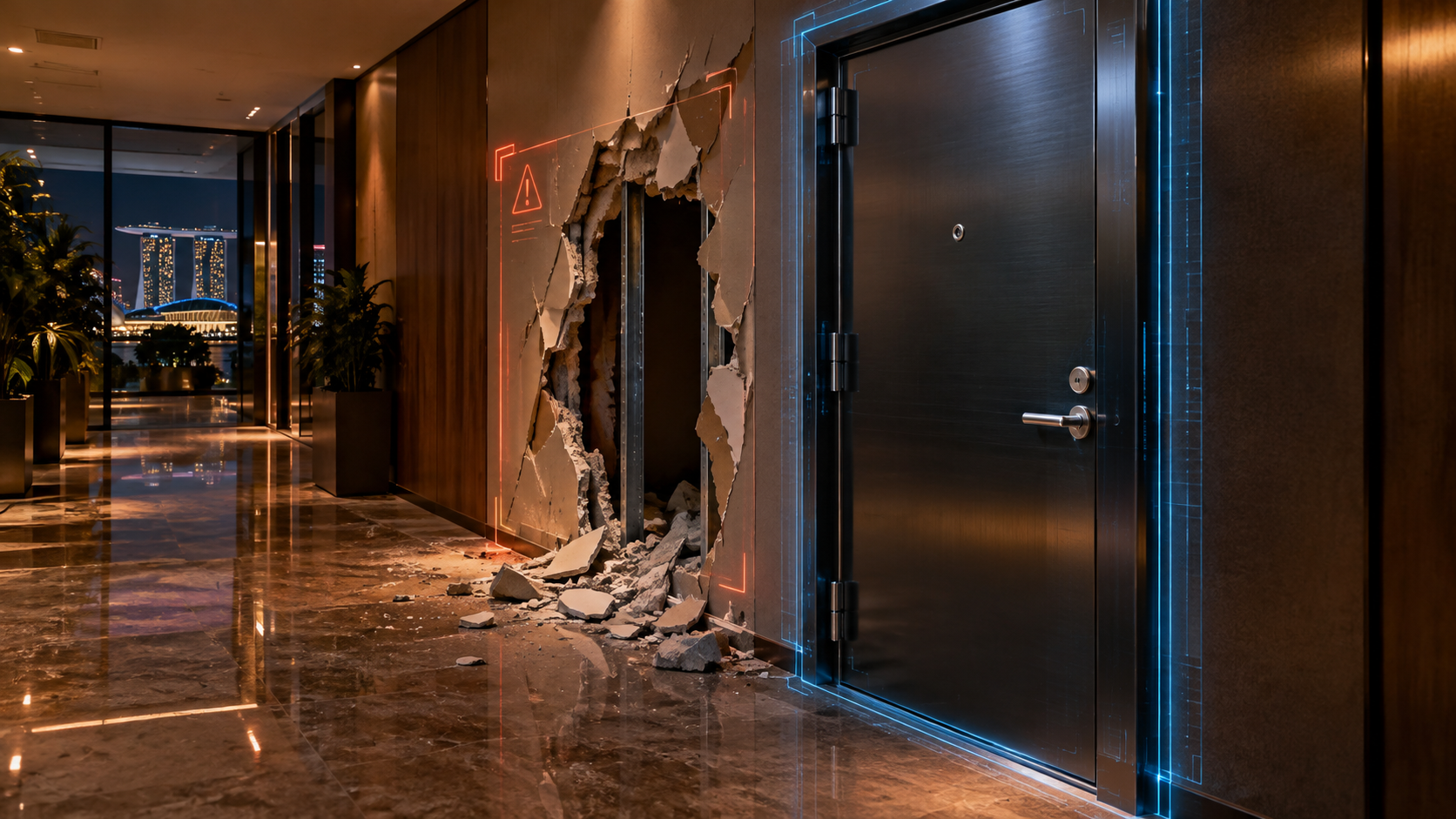
Then, during a routine building walk—or worse, after a break-in attempt—you discover a shocking reality: an intruder didn’t even touch the door. They simply smashed through the soft plasterboard wall right beside it in less than 60 seconds.
This isn’t a hypothetical nightmare. It is one of the most common real-world installation mistakes we see across commercial, industrial, and residential properties in Singapore.
In this case study, we break down why expensive security hardware fails when installed incorrectly, and how Managing Agents (MAs) and MCST councils can stop wasting money on “Security Theater.”
The Real Story: The High-Security Door vs. The Gypsum Board
During one of our recent building security audits, a property manager brought us in to inspect a newly upgraded secure access point. The building council had spent a significant portion of their annual maintenance budget installing an elite, certified forced-entry-resistant door.
On paper, everything looked perfect:
- The steel door leaf was heavy and solid.
- The multi-point lock mechanism worked smoothly.
- The card reader beeped and locked instantly.
However, when our team inspected the surrounding structure, we noticed a critical flaw: the heavy steel frame was bolted directly into standard, hollow gypsum drywall (plasterboard).
Why This Is a Major Vulnerability
Under Singapore’s official security guidelines, a security barrier is only as strong as its weakest link. Here is what happens when you pair a heavy steel door with a weak wall:
- Easy Wall Breaches: An intruder using a basic $20 sledgehammer or crowbar from a hardware store can destroy hollow drywall or thin brickwork in under two minutes, bypassing the door entirely.
- Anchor Failure: Heavy steel doors require massive structural support. When bolted into soft plasterboard, a strong kick or pry bar can tear the entire door frame right out of the wall.
- The “Vendor Silo” Problem: The door installer’s job was only to fit the door. The builder’s job was only to put up the wall. Neither vendor checked if their work fit together—and the property manager was left with a false sense of safety.
3 Simple Rules to Fix the “Door vs. Wall” Problem

You don’t need an engineering degree to make sure your building is properly protected. Here are three simple, layman rules every Managing Agent should follow before paying a hardware contractor:
Rule 1: Always Match the Wall to the Door
If you are installing a high-security door, the wall around it must be built to match. Critical rooms (like server vaults, electrical mains, or high-value storage) should be enclosed in at least 150mm thick reinforced concrete or backed with heavy steel expansion mesh. Never mount a heavy security door on a hollow partition wall.
Rule 2: Inspect the Anchor Points, Not Just the Leaf
When reviewing a contractor’s installation, look at where the frame meets the building structure. Ensure heavy steel expansion bolts are driven deep into solid concrete pillars or load-bearing slabs—not screwed into soft plaster or decorative cladding.
Rule 3: Demand One Accountable Operator
Stop hiring separate contractors for doors, walls, and card readers. When three different vendors work on one doorway, they inevitably blame each other when something breaks or fails an audit. Choose a provider who takes total ownership of the entire doorway—hardware, structure, and electronics together.
Free Tuition: Audit Your Doors Before You Buy
At PATH, we believe in “Free Tuition”—giving property managers honest, practical advice without any high-pressure sales pitch.
Before your council approves a $10,000 budget for new security doors or access control upgrades, let our engineering team inspect your entire entry boundary for free. We’ll help you spot hidden structural gaps, check your wall anchoring, and make sure your budget actually buys real protection.
👉 Ready to audit your building’s physical security?
Visit path-sg.com today to book your 100% Free Building Security Audit with Mo and the PATH engineering team.
From Manpower to Managed Security. One operator, total accountability.